Let’s be real, the humble microwave has been a kitchen hero for decades, rescuing us from the brink of starvation with lightning-fast reheating. But it’s always had an Achilles’ heel: sogginess. That leftover pizza? Limp. Those french fries? Sad and floppy. This is where our in-depth Grill Microwave Oven Review comes in, exploring the appliance that promises the speed of a microwave with the crispy, golden-brown finish of a grill. It’s the two-in-one culinary gadget you might not have known you needed, but once you understand it, you’ll wonder how you lived without it.
For a long time, we accepted this trade-off. Speed for texture. But what if you could have both? The grill microwave oven steps onto the scene as a game-changer, designed to do more than just nuke your leftovers. It aims to actually cook and finish food, opening up a new world of possibilities. If you’re curious about how these machines stack up, you’re in the right place. We’ll break down the tech, the benefits, and what to look for to ensure you get a machine that truly delivers on its promise. To get a better grasp of how we evaluate these appliances, understanding a typical microwave oven performance test can provide valuable context.
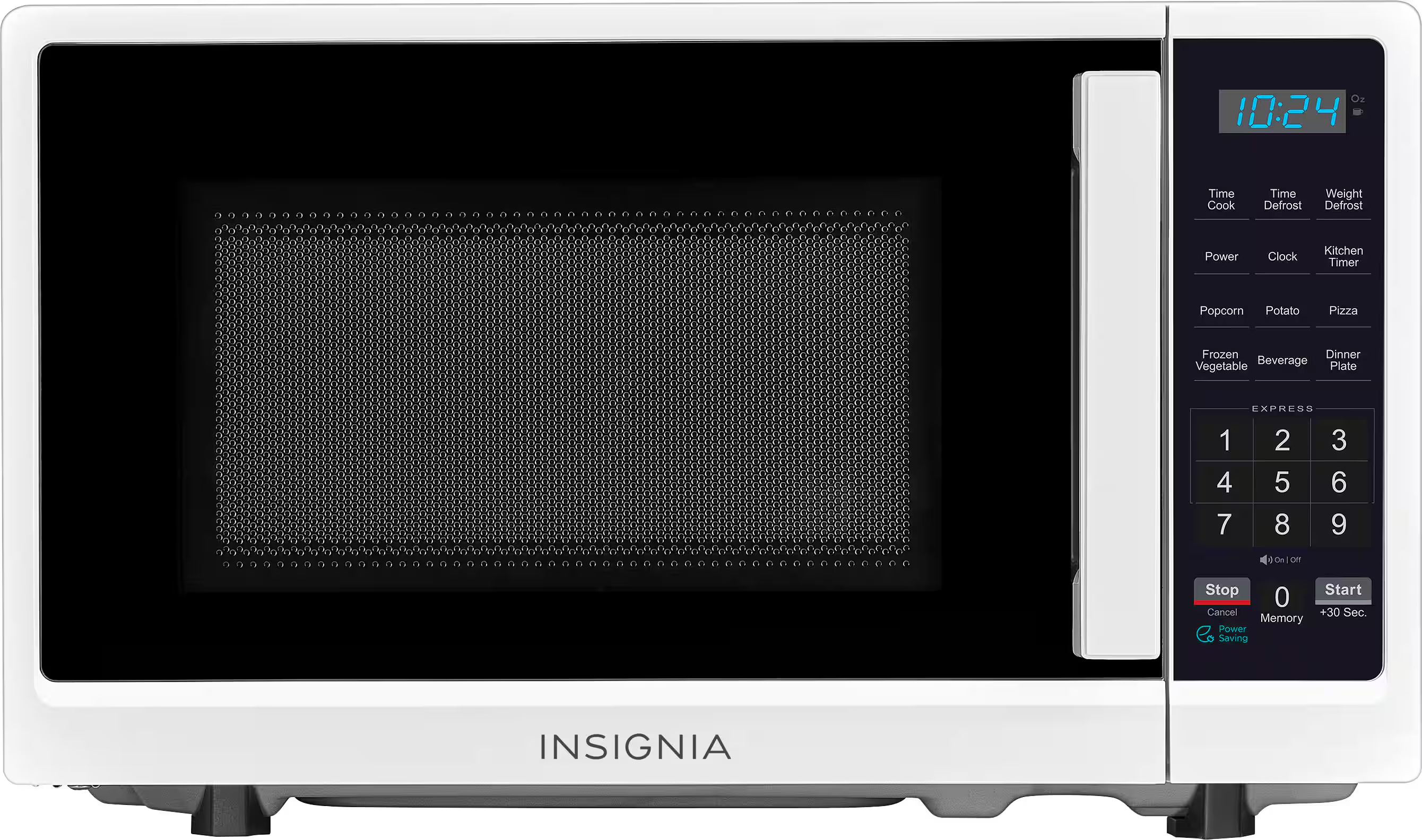
What Exactly Is a Grill Microwave Oven?
A grill microwave oven is a combination appliance that merges the standard microwave functionality with an internal grilling element. This heating element, typically located at the top of the oven’s interior, works much like the broiler in a conventional oven. It radiates intense heat downwards, allowing you to brown, crisp, and char your food in a way a standard microwave simply can’t.
Think of it this way: the microwaves cook the food from the inside out, while the grill element cooks it from the outside in. When used together in a “combi” mode, you get the best of both worlds: food that’s cooked through quickly and finished with a delicious, restaurant-quality texture. It’s the secret to perfectly melted cheese on nachos, crispy-skinned chicken wings, and even grilled sandwiches, all without firing up your big oven.
How Does the Grilling Magic Happen?
The “magic” is actually some pretty straightforward engineering. At the top of the microwave’s cavity, there’s a quartz or radiant heating element. When you select the grill function, this element heats up to a high temperature, glowing red just like a toaster oven’s coil. A metal rack is usually included to elevate your food, bringing it closer to the heat source for optimal grilling and browning. This direct, intense heat is what creates the Maillard reaction—the chemical process responsible for that irresistible golden-brown color and savory flavor on cooked food.
The Big Showdown: Grill vs. Convection vs. Solo Microwaves
It’s easy to get lost in the jargon. Let’s clear up the differences between the most common types of microwave ovens you’ll find on the market.
| Feature | Solo Microwave | Grill Microwave | Convection Microwave |
|---|---|---|---|
| Primary Function | Reheating, defrosting, basic cooking | All solo functions + grilling, browning, crisping | All grill functions + baking, roasting (like a small oven) |
| Heating Method | Microwaves only | Microwaves + Radiant Grill Element | Microwaves + Grill Element + Fan for Air Circulation |
| Best For | Leftovers, popcorn, melting butter | Grilled cheese, crispy pizza, sausages, chicken pieces | Roasting a whole chicken, baking cookies, pizza |
| Typical Cost | $ | $$ | $$$ |
| Key Advantage | Simplicity and affordability | Adds texture and browning capabilities | The most versatile, can act as a secondary oven |
|
Our Picks for the Best Microwave Oven in 2026
As an Amazon Associate, we earn from qualifying purchases.
|
||
| Num | Product | Action |
|---|---|---|
| 1 | Farberware FMWO11AHTBKB 1.1 Cu. Ft. Stainless Steel Countertop Microwave Oven |

|
| 2 | TOSHIBA ML4-EM12PA(BS) Countertop Microwave Oven with Stylish Design As Kitchen Essentials, Smart Sensor, 13 Auto Menus&Mute Function, 1.2 Cu Ft with 12.4\" Turntable, 1000W, Black Stainless Steel |
|
| 3 | Nostalgia Retro 1000W Microwave Oven 1.1 Cu Ft Capacity – Child Safety Lock, 8 Auto-Cook Settings – Countertop Kitchen Appliance – White |
|
| 4 | BLACK+DECKER EM031MB11 Digital Microwave Oven with Turntable Push-Button Door, Child Safety Lock, 1000W, 1.1cu.ft, Black & Stainless Steel, 1.1 Cu.ft |
|
| 5 | TOSHIBA ML-EM09PA(SS) Small Microwave Oven with 6 Auto Menus, Mute Function & Child Lock, LED Lighting, Perfect for Apartments & Dorms, 0.9 Cu Ft, 10.6 Inch Removable Turntable, 900W, Stainless Steel |
|
| 6 | Chefman Countertop Microwave Oven 0.7 Cu. Ft., 700 Watts with 10 Power Levels, 6 Cooking Presets with One-Touch Express Cook, Eco Mode, Child Safety Lock, & Mute Button - Black |
|
| 7 | Chefman Countertop Microwave Oven 0.9 Cu. Ft., 900 Watts with 10 Power Levels, 6 Cooking Presets with One-Touch Express Cook, Eco Mode, Child Safety Lock, & Mute Button - Black |
|
| 8 | TOSHIBA ML-EM45P(BS) Countertop Microwave Oven with Smart Sensor and Position Memory Turntable, Function, 1.6 Cu.ft 13.6\" Removable Black Stainless Steel, 1200W |
|
| 9 | TOSHIBA EM131A5C-BS Countertop Microwave Ovens 1.2 Cu Ft, 12.4\" Removable Turntable Smart Humidity Sensor 12 Auto Menus Mute Function ECO Mode Easy Clean Interior Black Color 1000W |
|
| 10 | BLACK+DECKER Digital Microwave Oven with Turntable Push-Button Door, Child Safety Lock, Stainless Steel, 0.9 Cu Ft |
|
Our In-Depth Grill Microwave Oven Review Criteria
When we evaluate a grill microwave, we’re looking beyond the sticker price. We’re focused on performance and usability. Here’s what truly matters.
Grilling Performance: The Deal Breaker
This is non-negotiable. A good grill microwave should provide even browning without hot spots. We look for a grill that can properly crisp up a pizza crust, give a nice char to vegetables, and melt cheese without turning it into rubber. If the grill is underpowered, you’ll just end up with slightly dried-out food instead of a truly grilled texture.
“A common mistake consumers make is focusing only on microwave wattage,” notes John Peterson, an appliance engineer with over 15 years of experience. “For a grill model, the power and efficiency of the grilling element are just as, if not more, important for achieving that desired crispy finish.”
Wattage and Power: The Engine of Your Microwave
Microwave power is measured in watts. Generally, the higher the wattage, the faster and more evenly your food will cook. For a standard microwave, 1000 watts is a great sweet spot. For a grill combination oven, you want to ensure both the microwave and the grill functions are adequately powered to work effectively, especially in combination modes.
Size and Capacity: Will It Fit Your Life?
Microwave capacity is measured in cubic feet.
- Compact (0.5 – 0.8 cu. ft.): Perfect for dorm rooms, small apartments, or reheating single meals.
- Mid-Size (0.9 – 1.3 cu. ft.): The most common size, ideal for families. It can typically fit a standard dinner plate or a medium-sized casserole dish.
- Full-Size (1.4 – 2.2 cu. ft.): Great for large families or those who want to cook larger items. Some can even fit a whole chicken or a 13×9 inch baking dish.
Before you buy, measure your counter space! And think about what you actually put in your microwave. Don’t pay for space you’ll never use.
The Bells and Whistles: Features That Matter
Modern microwaves are packed with tech. Here are a few features that can make a real difference:
- Combination Cooking: This is the key feature of a grill microwave. It allows you to use microwaves and the grill simultaneously to cook food fast and brown it at the same time.
- Sensor Cooking: Sensors detect the humidity released by food as it cooks and automatically adjust the time and power. It takes the guesswork out of reheating a plate of food.
- Inverter Technology: Instead of just cycling on and off at full power, inverter technology delivers a continuous, steady stream of power at lower levels. This leads to more even cooking, better defrosting (no more cooked edges and frozen centers), and is a hallmark of more advanced models. To learn more about this specific technology, a deep dive into an inverter microwave oven review can be very insightful.
- Preset Buttons: Buttons for “Popcorn,” “Pizza,” or “Baked Potato” can be surprisingly accurate and convenient.
Getting the Most Out of Your Grill Microwave: Pro Tips
Owning a grill microwave is one thing; using it to its full potential is another. Here are a few tips I’ve learned over the years:
- Always Use the Rack: That little metal rack isn’t optional for grilling. It lifts your food closer to the heating element and allows air to circulate underneath, preventing a soggy bottom.
- Master the Combi-Modes: Don’t just use the grill function on its own. Experiment with the combination settings. This is the fastest way to get juicy-on-the-inside, crispy-on-the-outside results for things like chicken thighs or sausages.
- Don’t Overcrowd the “Grill”: Just like a real barbecue, your microwave grill needs space. Overcrowding the rack will steam your food instead of crisping it. Cook in batches if you have to.
- Think Beyond the Obvious: Try grilling slices of pineapple for a sweet treat, making quick bruschetta by toasting bread with toppings, or even crisping up day-old pastries.
Common Myths and Safety Concerns Debunked
Let’s address the elephant in the room: microwave safety. Decades of misinformation have left many people feeling uneasy.
- Myth: Microwaves make your food radioactive.
- Fact: Absolutely false. Microwaves use non-ionizing radiation (a form of radio wave) to make water molecules in food vibrate, which generates heat. It doesn’t alter the food’s molecular or genetic structure in any way. It’s science, not science fiction.
- Safety Tip: Use Microwave-Safe Cookware. This is crucial. Never put metal (other than the manufacturer-provided grill rack), aluminum foil, or non-microwave-safe plastic in your microwave. It can cause sparking, damage the appliance, and even start a fire. Look for a “microwave-safe” label on your dishes.
When selecting a unit, considering all aspects from features to build quality is important. For those looking for top-tier options, exploring a premium microwave oven review can highlight the differences in durability and advanced functionalities.
Choosing Your Perfect Match: A Buyer’s Checklist
Ready to take the plunge? Use this checklist to guide your decision.
- [ ] Measure Your Space: Does it fit on your counter?
- [ ] Check the Capacity: Is it big enough for your typical meals?
- [ ] Verify the Wattage: Aim for at least 1000 watts for the microwave.
- [ ] Assess the Grill Power: Look for reviews that specifically mention strong, even grilling.
- [ ] Review the Features: Do you need sensor cooking? Is inverter technology a priority?
- [ ] Ease of Use: Is the control panel intuitive? Can you easily clean the interior?
- [ ] Brand Reputation: Some brands are known for their reliability and customer service. Reading reviews from specific brands, like a Samsung microwave oven review, can give you an idea of what to expect from a major player in the market.
Frequently Asked Questions (FAQ)
1. Can a grill microwave oven replace my regular oven?
For most tasks, no. While it’s incredibly versatile for grilling, crisping, and reheating, it typically lacks the space and the powerful baking/roasting capabilities of a full-sized conventional oven. Think of it as a powerful sidekick, not a full replacement.
2. What can I cook with the grill function?
You can cook a surprising amount! Think sausages, chicken wings, fish fillets, grilled cheese sandwiches, quesadillas, crispy-topped pasta bakes, and even charred vegetables like asparagus or bell peppers.
3. Is a grill microwave hard to clean?
It can be slightly more challenging than a solo microwave because the grill element can catch splatters. Look for models with stainless steel or easy-clean enamel interiors. The best way to clean is to wipe it down right after use once it has cooled.
4. Are grill microwave ovens more expensive?
Yes, they are generally more expensive than basic solo microwaves due to the additional heating element and more complex technology. However, their added versatility often justifies the moderate price increase.
5. Do I need special cookware for the grill function?
You must use the metal rack that comes with the oven for grilling. For the dish itself, ensure it is both microwave-safe and heat-proof/oven-safe, as the grill element produces intense heat similar to a broiler. Glass or ceramic dishes are usually a safe bet.
The Final Word
The journey through the world of microwaves doesn’t have to end with a simple reheating box. A final grill Microwave Oven review shows us that this appliance is a genuinely useful hybrid that bridges the gap between speed and quality. It brings texture, flavor, and a wider range of cooking possibilities to your kitchen countertop. By understanding the technology, knowing what features to look for, and learning a few simple tricks, you can elevate your quick-meal game from soggy to spectacular. It’s a smart investment for anyone who values both convenience and a delicious, crispy bite.