Let’s be honest, the microwave oven is the unsung hero of the modern kitchen. It’s the magic box that turns last night’s leftovers into a steaming hot lunch, melts butter in seconds, and saves us on those nights when we’re just too tired to cook. But when it comes time to buy a new one, the sheer number of options can be overwhelming. Finding the Best Microwave Oven Brands 2025 requires more than just looking at a price tag; it’s about understanding what makes these appliances tick. This guide is here to demystify the technology, bust some myths, and help you find the perfect countertop companion for your culinary adventures.
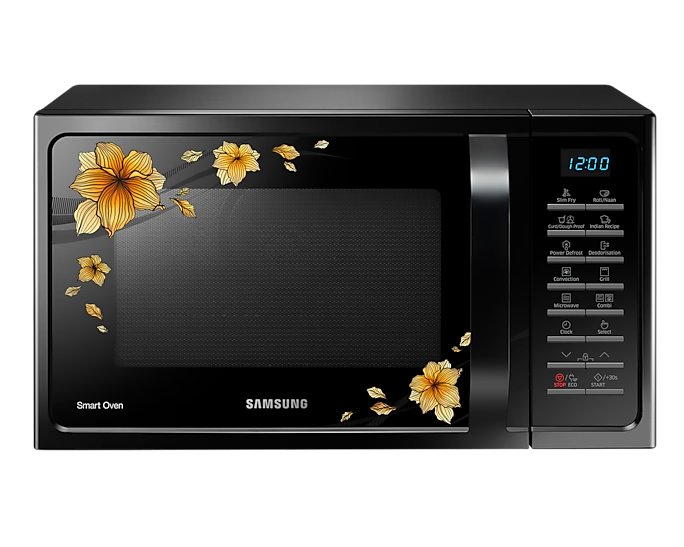
How Does a Microwave Actually Work?
Ever wondered what’s happening inside that box when you press “start”? It’s a fascinating bit of science, really.
A microwave oven works by using a component called a magnetron to generate microwaves, which are a type of electromagnetic wave. These waves bounce around the inside of the oven and cause the water molecules in your food to vibrate incredibly fast. This rapid vibration creates friction, which in turn generates heat and cooks your food from the inside out. It’s why foods with high water content, like vegetables, cook so quickly.
Cracking the Code: Types of Microwave Ovens
Not all microwaves are created equal. The right type for you depends on your cooking habits, kitchen space, and budget. Let’s break down the main players.
The Solo Microwave
This is your classic, no-frills microwave. Its main job is to reheat, defrost, and cook simple meals. Think of it as the dependable sedan of the microwave world—it gets the job done reliably without any fancy extras. They are typically the most affordable and straightforward to use, making them perfect for dorm rooms, small apartments, or anyone who just needs the basics.
The Grill Microwave
A step up from the solo model, a grill microwave includes an additional heating element. This allows you to brown, crisp, and grill food, giving you that satisfying finish that a standard microwave can’t. It’s great for things like melting cheese on toast, grilling a sandwich, or getting a bit of a char on sausages.
The Convection Microwave
This is the multi-tool of the microwave world. A convection microwave combines standard microwave technology with a fan and a heating element, essentially turning it into a small oven. You can use it to bake, roast, and brown food just like a conventional oven, but often in less time. If you’re short on space or want a second oven, this is an incredibly versatile option.
The Over-the-Range (OTR) Microwave
Designed to be installed above your stove, the OTR microwave is a brilliant space-saver. It combines the functions of a microwave with a range hood, providing ventilation for your cooktop. These models often come packed with features and are a popular choice for homeowners looking for a sleek, integrated kitchen design.
|
Our Picks for the Best Microwave Oven in 2025
As an Amazon Associate, we earn from qualifying purchases.
|
||
| Num | Product | Action |
|---|---|---|
| 1 | BLACK+DECKER Digital Microwave Oven with Turntable Push-Button Door, Child Safety Lock, Stainless Steel, 0.9 Cu Ft |

|
| 2 | TOSHIBA ML4-EM12PA(BS) Countertop Microwave Oven with Stylish Design As Kitchen Essentials, Smart Sensor, 13 Auto Menus&Mute Function, 1.2 Cu Ft with 12.4\" Turntable, 1000W, Black Stainless Steel |
|
| 3 | TOSHIBA ML-EM45P(BS) Countertop Microwave Oven with Smart Sensor and Position Memory Turntable, Function, 1.6 Cu.ft 13.6\" Removable Black Stainless Steel, 1200W |
|
| 4 | Nostalgia Retro 1000W Microwave Oven 1.1 Cu Ft Capacity – Child Safety Lock, 8 Auto-Cook Settings – Countertop Kitchen Appliance – White |
|
| 5 | Chefman Countertop Microwave Oven 0.7 Cu. Ft., 700 Watts with 10 Power Levels, 6 Cooking Presets with One-Touch Express Cook, Eco Mode, Child Safety Lock, & Mute Button - Black |
|
| 6 | BLACK+DECKER EM031MB11 Digital Microwave Oven with Turntable Push-Button Door, Child Safety Lock, 1000W, 1.1cu.ft, Black & Stainless Steel, 1.1 Cu.ft |
|
| 7 | TOSHIBA ML-EM09PA(SS) Small Microwave Oven with 6 Auto Menus, Mute Function & Child Lock, LED Lighting, Perfect for Apartments & Dorms, 0.9 Cu Ft, 10.6 Inch Removable Turntable, 900W, Stainless Steel |
|
| 8 | Farberware FMWO11AHTBKB 1.1 Cu. Ft. Stainless Steel Countertop Microwave Oven |
|
| 9 | TOSHIBA EM131A5C-BS Countertop Microwave Ovens 1.2 Cu Ft, 12.4\" Removable Turntable Smart Humidity Sensor 12 Auto Menus Mute Function ECO Mode Easy Clean Interior Black Color 1000W |
|
| 10 | Chefman Countertop Microwave Oven 0.9 Cu. Ft., 900 Watts with 10 Power Levels, 6 Cooking Presets with One-Touch Express Cook, Eco Mode, Child Safety Lock, & Mute Button - Black |
|
Key Features to Look for in 2025 Models
When you’re comparing the best microwave oven brands 2025, you’ll run into a lot of technical jargon. Here are the features that actually matter.
- Inverter Technology: This is a game-changer. Traditional microwaves cycle their power on and off to achieve a lower power setting (like 50%). Inverter technology delivers a continuous, steady stream of power at the level you select. The result? More even cooking, no more rubbery chicken edges, and perfectly defrosted food without cooked spots.
- Wattage: Power matters. Wattage determines how quickly and evenly your microwave cooks. A 700-watt model will get the job done, but a 1000-1200 watt model will be significantly faster and more efficient. Higher wattage is especially important for larger families or for cooking dense foods.
- Sensor Cooking: This is a brilliant feature that takes the guesswork out of cooking. Built-in sensors measure the steam and humidity coming from the food to automatically adjust the cooking time and power level. Just press “popcorn” or “baked potato,” and the microwave does the rest.
- Smart Features: Many new models come with Wi-Fi connectivity, allowing you to control them with your smartphone or voice assistant. You can scan a barcode on a frozen meal, and the microwave will download the exact cooking instructions. Is it a necessity? No. Is it incredibly cool and convenient? Absolutely.
- Size and Capacity: Measured in cubic feet, capacity is crucial. A compact 0.7 cu. ft. model is fine for reheating coffee, but a family will likely need a 1.2 cu. ft. or larger model to fit bigger dishes. Pro tip: Take the measurements of your largest dinner plate before you go shopping!
Let’s Talk Safety: Busting Microwave Myths
Microwaves have been around for decades, but some old myths just won’t go away. Let’s clear the air on microwave safety.
Myth: Microwave ovens release harmful radiation.
Fact: Microwave ovens use non-ionizing radiation, which is not the same as the ionizing radiation from X-rays or nuclear sources. According to the U.S. Food and Drug Administration (FDA), modern microwaves are built with excellent shielding that contains the microwaves within the oven. As long as your microwave door is intact and closes properly, it is perfectly safe.
Myth: Microwaving food destroys its nutrients.
Fact: All forms of cooking can reduce the nutrient content of food to some degree. However, because microwave cooking is fast and uses less water than boiling, it can actually be better at preserving certain vitamins and minerals, such as Vitamin C.
Choosing Your Perfect Match: A Buyer’s Guide for the Best Microwave Oven Brands 2025
Ready to make a decision? Run through this checklist to narrow down your options. John Peterson, an appliance engineer with 15 years of experience, advises, “Don’t just focus on the brand name. Pay close attention to the wattage and the presence of inverter technology. A 1200-watt inverter microwave from a lesser-known brand will almost always outperform a 900-watt basic model from a big name.”
Your Microwave Buying Checklist
- [ ] Where will it live? Countertop, over-the-range, or a built-in model? Measure your space carefully.
- [ ] How big is your family? A solo user or couple can get by with under 1.0 cu. ft. A family of four should look for 1.2 cu. ft. and up.
- [ ] What will you cook? If you’re just reheating and defrosting, a simple solo microwave is fine. If you dream of baking or roasting, a convection model is worth the investment.
- [ ] What’s your budget? Prices can range from under $100 to over $1,000. Decide on your price range before you start looking to avoid getting overwhelmed.
- [ ] Which features are non-negotiable? Do you need sensor cooking? Is inverter technology a must-have? Make a list of your top priorities.
Getting the Most Out of Your Microwave: Pro Tips & Maintenance
A little care goes a long way in keeping your microwave running efficiently and safely. I once learned the hard way that a little bit of tomato sauce splatter can turn into a baked-on cement if you ignore it for too long.
How to Clean Your Microwave Easily
- Steam Clean: Fill a microwave-safe bowl with one cup of water and a tablespoon of white vinegar or lemon juice.
- Heat it Up: Microwave on high for 3-5 minutes, or until the mixture is boiling and the window is steamy.
- Let it Sit: Leave the door closed for another 5 minutes to let the steam do its work.
- Wipe Down: Carefully remove the bowl (it will be hot!). The steam will have loosened all the grime, allowing you to wipe the interior clean with a sponge or paper towel.
- Clean the Turntable: Wash the glass turntable and roller ring in the sink or dishwasher.
Frequently Asked Questions
Q: What is the ideal wattage for a microwave oven?
A: For most households, a microwave with 1000 to 1200 watts offers the best balance of cooking speed and efficiency. Anything below 900 watts will cook noticeably slower, while anything above 1200 watts is often overkill for everyday use.
Q: How long should a microwave oven last?
A: The average lifespan of a microwave oven is about 7-10 years with regular use and proper care. Heavy use or neglecting to clean it can shorten its lifespan, while a well-maintained unit can sometimes last even longer.
Q: Can you put metal in a microwave?
A: Generally, no. Large, flat pieces of metal can reflect microwaves and damage the magnetron. However, some newer microwaves are designed to handle certain types of metal, and small amounts of smooth aluminum foil can sometimes be used to shield parts of food from overcooking. Always check your user manual first.
Q: Is a convection microwave worth the extra cost?
A: If you have a small kitchen, frequently cook for one or two people, or would love the convenience of a second oven, then a convection microwave is absolutely worth it. It provides incredible versatility for baking, roasting, and crisping foods.
Q: What’s the difference between a turntable and a flatbed microwave?
A: A turntable is the traditional rotating glass plate that ensures food is exposed to microwaves evenly. A flatbed microwave uses a rotating antenna beneath the floor of the oven to distribute the microwaves, eliminating the need for a turntable and giving you more usable space.
Your Kitchen’s Next Power Player
Choosing a microwave is no longer just about picking a black or white box. By understanding the core technology, from wattage to inverter systems, you’re empowered to look beyond the marketing and find a machine that truly fits your lifestyle. The search for the best Microwave Oven brands 2025 is a journey into finding the perfect blend of power, convenience, and innovation for your home. We hope this guide has armed you with the knowledge to make a confident choice and unlock the full potential of this amazing kitchen appliance.