Ever been hit by a sudden, intense craving for a warm, fluffy slice of cake, only to realize you don’t have the time or patience to preheat your conventional oven? You’re not alone. Your trusty microwave, the hero of leftovers and quick meals, might just be the secret weapon you’ve been overlooking. But the question of How To Bake Cake In Microwave Oven can feel like trying to solve a culinary riddle. Is it even possible? Will it turn out rubbery? I’m here to tell you that not only is it possible, but with the right know-how, you can achieve surprisingly delicious results.
Forget everything you thought you knew about microwave cooking being just for reheating. We’re about to dive deep into turning your countertop gadget into a bona fide baking assistant. This isn’t just a recipe; it’s a masterclass in understanding your microwave to unlock its full potential.
Can You Actually Bake a Cake in Any Microwave?
Let’s get this out of the way first. The short answer is yes, but the quality of your cake heavily depends on the type of microwave you own. Understanding this difference is the first and most crucial step in your microwave baking journey.
Think of it this way: a standard microwave’s primary job is to excite water molecules in food using microwaves, which generates heat from the inside out. This is fantastic for reheating soup, but it’s a tricky way to bake a cake, which requires dry, circulating heat to rise and brown properly.
Understanding Your Appliance: Not All Microwaves Are Created Equal
To successfully bake, you need to know what kind of machine you’re working with. Most households have one of three types, and their baking capabilities vary wildly.
Solo Microwaves: The Quick Reheater
This is your basic, no-frills microwave. It has one function: to heat food using microwaves. You can absolutely make a quick “mug cake” in these, and it will satisfy a craving in 90 seconds. However, attempting a full-sized cake is a gamble. Because it cooks so quickly and with moist heat, the result is often more steamed and spongy than traditionally baked, and you won’t get that golden-brown crust.
Grill Microwaves: A Step Up
These models include a heating element at the top, similar to a broiler. While this is great for getting a nice char on a piece of chicken or melting cheese, it doesn’t do much for baking a cake. The heat is too direct and comes from only one direction, which can lead to a burnt top and a raw middle.
Convection Microwaves: The True Baking Champion
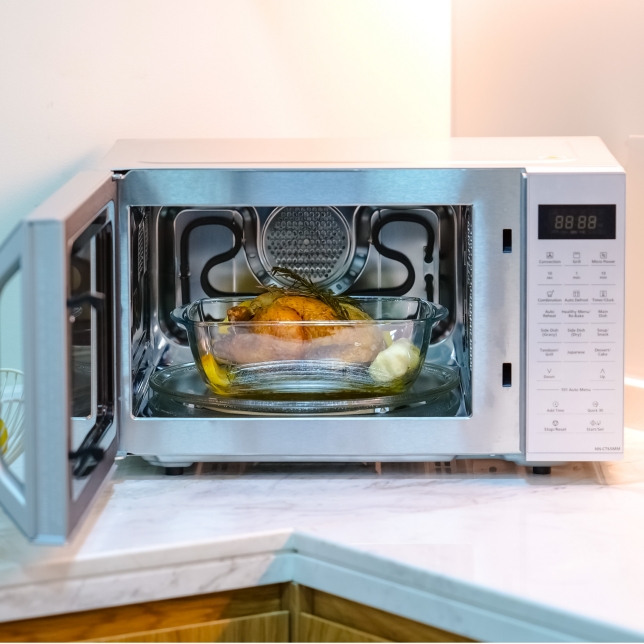
This is the golden ticket for microwave baking. A convection microwave combines standard microwave technology with an additional heating element and a fan. This fan circulates hot, dry air throughout the oven, just like a conventional oven. This is the key to achieving a cake that is evenly cooked, has a beautiful rise, and develops a perfectly browned crust. If you’re serious about learning how to bake cake in microwave oven, this is the type of appliance that will deliver the best and most consistent results.
“A convection microwave is a game-changer. The circulating air ensures the batter cooks evenly from the edges to the center, solving the ‘rubbery texture’ problem that plagues standard microwave cakes.” – John Peterson, appliance engineer with 15 years of experience.
How to Bake Cake in a Microwave Oven: The Ultimate Guide
Ready to get your hands dirty? Whether you have a basic solo model or a feature-packed convection oven, this step-by-step guide will set you up for success.
Step 1: Choose the Right Recipe
This is non-negotiable. You cannot use a standard oven recipe and expect it to work in a microwave. Microwave cakes have a different ratio of liquids and leavening agents to compensate for the different cooking method. Look for recipes specifically designed for “microwave cake” or “convection microwave cake.”
- For Solo Microwaves: Stick to smaller recipes like mug cakes or recipes that call for a lower power setting.
- For Convection Microwaves: You can use recipes designed for convection microwave baking or even adapt small-batch standard oven recipes, though you may need to reduce the baking time.
Step 2: Pick Your Pan Wisely (A Cautionary Tale)
The right container is critical for both safety and cooking results. I once learned this the hard way when a beautiful ceramic dish, which I thought was microwave-safe, cracked right down the middle from the intense, focused heat. A heartbreaking lesson.
- MUST-USE: Silicone molds, borosilicate glass (like Pyrex), and microwave-safe ceramic dishes are your best friends. Silicone is particularly great because it’s flexible, making it easy to remove the cake.
- NEVER USE: Metal pans of any kind (unless you are using convection-only mode on a convection microwave). Metal reflects microwaves, which can cause dangerous arcing (sparks) and damage your appliance. Also, avoid dishes with metallic paint or trim.
Step 3: Mix Your Batter
Prepare your cake batter according to the recipe’s instructions. A key tip for microwave baking is to not overfill your container. Fill it no more than halfway, as microwave cakes tend to rise very quickly and dramatically. An overflowed cake batter is a sticky, frustrating mess to clean up.
Step 4: Setting Up Your Microwave
This is where the process diverges based on your machine.
For Convection Microwaves:
- Use the Metal Rack: Your convection microwave likely came with a short metal rack. Use it! Placing your pan on this rack allows the hot air to circulate underneath for even baking.
- Preheat: Select the convection mode. Set the temperature specified in your recipe (e.g., 350°F or 180°C) and let the oven preheat. It will beep to let you know when it’s ready.
- Set the Time: Place your cake inside, close the door, and set the baking time. Start with the lower end of the time suggested in the recipe.
For Solo Microwaves:
- Power Level is Everything: Do not cook the cake at 100% power. This is the number one reason microwave cakes turn out tough and rubbery. Reduce the power level to 70% (Medium-High) or even 50% (Medium). This allows the cake to cook more gently and evenly.
- Set the Time: Microwave cooking is much faster. A small cake might only take 5-8 minutes. It’s better to undercook slightly and add more time in 30-second increments than to overcook it.
Step 5: The Bake and the Wait (Standing Time is Key!)
Once the timer goes off, the most important—and most difficult—step is to wait. The cake continues to cook with residual heat even after the microwave stops. This is called standing time.
Let the cake sit in the microwave for at least 5-10 minutes before removing it. This allows the center to finish setting and prevents it from collapsing. Use the classic toothpick test: insert a toothpick into the center. If it comes out clean, it’s done.
Pro Tips for Perfect Microwave Cakes Every Time
- Grease and Flour: Just like traditional baking, always grease and flour your microwave-safe pan (or line it with parchment paper) to prevent sticking.
- Even Batter: Spread the batter evenly in the pan, hollowing out the center slightly. The edges cook faster, so this helps the center catch up.
- Rotate Manually: If your microwave doesn’t have a turntable, pause the cooking halfway through and give the dish a 180-degree turn to promote even cooking.
- Don’t Overbake: An overbaked microwave cake is a sad, dry cake. Always err on the side of caution and check for doneness early.
- Adjust for Wattage: Know your microwave’s wattage. A 1200-watt oven will cook much faster than a 700-watt one. You may need to adjust cooking times down or up accordingly.
Frequently Asked Questions (FAQ)
Q1: What is the best mode for baking cake in a microwave oven?
A: The best mode is convection mode. It uses a fan and heating element to circulate dry heat, mimicking a traditional oven for the best texture and browning. If you only have a standard microwave, use a reduced power level (50-70%) instead of the default 100%.
Q2: Can I use an aluminum cake tin in a convection microwave?
A: Yes, you can use aluminum or other metal cake tins only when using the convection-only mode. In this mode, the microwave function is turned off. Never use metal when using the standard microwave or a combination mode, as it will cause arcing.
Q3: Why did my microwave cake turn out rubbery?
A: A rubbery texture is almost always caused by overcooking or using a power level that is too high. A standard microwave cooks with intense energy, which can over-excite the proteins and starches, making the cake tough. Always use a lower power setting and check for doneness early.
Q4: How long does it take to bake a cake in a microwave?
A: It varies greatly depending on the recipe, microwave wattage, and mode. A mug cake in a solo microwave can take 1-2 minutes. A full cake in a convection microwave at 350°F might take 20-30 minutes, significantly less time than a conventional oven.
Q5: Can I make a layer cake in the microwave?
A: Absolutely! The best approach is to bake each layer separately. This ensures each layer cooks through evenly. Simply bake one layer, let it cool while you bake the next, and then assemble with your favorite frosting.
Learning how to bake cake in a Microwave Oven is less about magic and more about science. By understanding your specific appliance—especially if you have the advantage of inverter technology or a convection setting—and by choosing the right recipe and container, you can conquer that cake craving anytime it strikes. It opens up a new world of quick desserts and convenient baking. So go ahead, give it a try, and you might just be surprised by what your trusty microwave can do.