Let’s be honest, for many of us, the microwave is the king of convenience. It’s the go-to for reheating last night’s pizza, zapping a frozen dinner, or making popcorn for movie night. But what if I told you that this humble kitchen box is one of the most underrated tools in your arsenal for healthy eating? It’s true. Knowing how to use a microwave oven for healthy meals can completely transform your cooking routine, saving you time while locking in nutrients. Forget the myths you’ve heard; we’re here to show you how your microwave can be a secret weapon for a healthier lifestyle.
Before we dive into the techniques, it’s essential to understand that not all microwaves are created equal. The type of oven you have can influence your cooking results. To get a better grasp of the options available, from basic solo models to advanced convection units, exploring a comprehensive overview can be incredibly helpful. This foundational knowledge will empower you to make the most of the tips we’re about to share.
Busting the Big Microwave Myths: Is It Healthy?
The elephant in the room first: is microwave cooking even safe? And does it nuke all the nutrients out of your food? These are valid concerns that have been floating around for decades.
How Does a Microwave Oven Work, Anyway?
A microwave oven works by using a magnetron to generate microwaves, which are a type of electromagnetic wave, similar to radio waves. These waves cause the water molecules in your food to vibrate rapidly. This vibration creates friction, which in turn generates heat and cooks the food from the inside out. It’s a remarkably efficient way to cook.
The Nutrient Question: Friend or Foe?
Here’s the surprising truth: because microwave cooking is so fast and uses less water than methods like boiling, it can actually be better at preserving certain vitamins and minerals.
“Many studies have shown that microwaving retains nutrients more effectively than other cooking methods like boiling or frying,” notes Sarah Jenkins, a certified nutritionist and appliance technology expert. “The shorter cooking time and minimal water usage mean fewer water-soluble vitamins, like Vitamin C and B vitamins, are lost.”
Think about boiling broccoli. The water turns green because many of the nutrients have leached out into the water, which you then pour down the drain. When you steam that same broccoli in the microwave, those nutrients stay right where you want them: in the food.
The Healthy Microwave Cooking Toolkit
To start your journey into healthy microwave cooking, you don’t need much. Having the right tools makes all the difference in safety and results.
- Microwave-Safe Containers: This is non-negotiable. Look for containers made of glass, ceramic, or silicone. If using plastic, ensure it’s explicitly labeled “microwave-safe” and is BPA-free. I once learned the hard way that a regular plastic takeout container can warp and melt, which is not something you want leaching into your food.
- A Microwave-Safe Lid or Cover: Covering your food prevents splatters and traps steam, which helps cook food evenly and retain moisture. A vented lid is ideal. In a pinch, a damp paper towel works wonders, especially for reheating things like rice or pasta.
- Microwave Steamers: These are fantastic gadgets. They are typically plastic or silicone bowls with a vented lid and a tray to hold food above a small amount of water. They make steaming vegetables and fish foolproof.
|
Our Picks for the Best Microwave Oven in 2025
As an Amazon Associate, we earn from qualifying purchases.
|
||
| Num | Product | Action |
|---|---|---|
| 1 | Chefman Countertop Microwave Oven 0.7 Cu. Ft., 700 Watts with 10 Power Levels, 6 Cooking Presets with One-Touch Express Cook, Eco Mode, Child Safety Lock, & Mute Button - Black |

|
| 2 | Farberware FMWO11AHTBKB 1.1 Cu. Ft. Stainless Steel Countertop Microwave Oven |
|
| 3 | TOSHIBA ML4-EM12PA(BS) Countertop Microwave Oven with Stylish Design As Kitchen Essentials, Smart Sensor, 13 Auto Menus&Mute Function, 1.2 Cu Ft with 12.4\" Turntable, 1000W, Black Stainless Steel |
|
| 4 | BLACK+DECKER EM031MB11 Digital Microwave Oven with Turntable Push-Button Door, Child Safety Lock, 1000W, 1.1cu.ft, Black & Stainless Steel, 1.1 Cu.ft |
|
| 5 | Nostalgia Retro 1000W Microwave Oven 1.1 Cu Ft Capacity – Child Safety Lock, 8 Auto-Cook Settings – Countertop Kitchen Appliance – White |
|
| 6 | TOSHIBA EM131A5C-BS Countertop Microwave Ovens 1.2 Cu Ft, 12.4\" Removable Turntable Smart Humidity Sensor 12 Auto Menus Mute Function ECO Mode Easy Clean Interior Black Color 1000W |
|
| 7 | TOSHIBA ML-EM09PA(SS) Small Microwave Oven with 6 Auto Menus, Mute Function & Child Lock, LED Lighting, Perfect for Apartments & Dorms, 0.9 Cu Ft, 10.6 Inch Removable Turntable, 900W, Stainless Steel |
|
| 8 | Chefman Countertop Microwave Oven 0.9 Cu. Ft., 900 Watts with 10 Power Levels, 6 Cooking Presets with One-Touch Express Cook, Eco Mode, Child Safety Lock, & Mute Button - Black |
|
| 9 | BLACK+DECKER Digital Microwave Oven with Turntable Push-Button Door, Child Safety Lock, Stainless Steel, 0.9 Cu Ft |
|
| 10 | TOSHIBA ML-EM45P(BS) Countertop Microwave Oven with Smart Sensor and Position Memory Turntable, Function, 1.6 Cu.ft 13.6\" Removable Black Stainless Steel, 1200W |
|
Core Techniques: Your Guide on How to Use a Microwave Oven for Healthy Meals
Now for the fun part. Let’s move beyond the “reheat” button and explore the techniques that will make your microwave a healthy cooking powerhouse.
1. Steaming: The Undisputed Champion
Steaming is arguably the healthiest way to cook vegetables, fish, and poultry. It requires no oil and preserves texture, color, and nutrients beautifully. For a deep dive into the specifics of this technique, our guide on how to steam vegetables in microwave oven covers everything from timing to seasoning.
How to do it:
- Chop your vegetables (like broccoli, carrots, or green beans) into uniform pieces.
- Place them in a microwave-safe bowl with 2-3 tablespoons of water.
- Cover the bowl with a vented lid or a microwave-safe plate.
- Microwave on high for 3-5 minutes, depending on the vegetable’s density and your microwave’s wattage. Let it stand for a minute before carefully removing the cover—the steam will be hot!
2. Poaching: Quick, Lean, and Delicious
Poaching is a gentle, moist-heat cooking method that’s perfect for delicate foods like eggs, salmon, or chicken breasts.
For a perfect poached egg:
- Crack an egg into a small, microwave-safe bowl or mug.
- Add about 1/3 cup of water and a splash of vinegar (this helps the white set).
- Gently pierce the yolk with a toothpick to prevent it from exploding.
- Cover the bowl with a saucer and microwave on high for 60-90 seconds. The timing depends on your microwave, so start with less and add 15-second increments until the white is set but the yolk is still runny.
3. “Baking” and Roasting with Convection
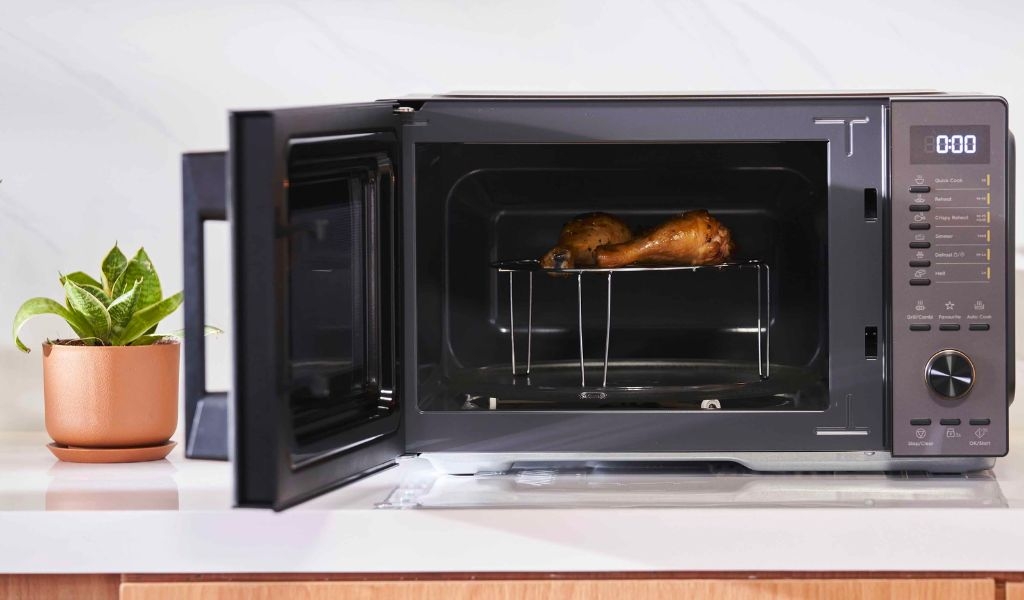
If you have a convection microwave, you’ve got a game-changer. These models have a fan and a heating element that circulates hot air, just like a traditional oven. This allows you to roast a whole chicken, bake potatoes until their skins are crispy, or even make a small batch of cookies. You get the speed of a microwave with the browning and crisping power of an oven.
Unlocking Your Microwave’s Advanced Features
Modern microwaves are more than just an on/off switch. Understanding their features is key to mastering healthy cooking.
Why Does Microwave Wattage Matter?
Microwave wattage is a measure of its cooking power, typically ranging from 600 to 1200 watts. A higher wattage means faster cooking times. Most recipes are written for 1000-watt ovens. If yours is lower, you’ll need to add a bit more time; if it’s higher, you might need to reduce it to avoid overcooking.
Master the Power Levels
Don’t just cook everything on “High” (100% power). Lower power levels are perfect for delicate tasks.
- 50% Power: Ideal for simmering sauces, slow-cooking stews, or gently softening butter or chocolate.
- 30% Power (Defrost): Perfect for thawing frozen meat without cooking the edges.
The Power of Inverter Technology
You might see inverter technology advertised on newer models. What is it? Traditional microwaves achieve lower power levels by cycling their magnetron on and off. An inverter microwave delivers a constant, steady stream of lower power. This results in much more even cooking, preventing the “cooked on the outside, frozen on the inside” problem when defrosting and allowing for more delicate cooking.
Healthy Microwave Meal Ideas to Get You Started
- Quick Oatmeal: Combine ½ cup of rolled oats with 1 cup of water or milk in a large bowl. Microwave on high for 2-3 minutes. Top with berries and nuts.
- “Baked” Sweet Potato: Pierce a sweet potato all over with a fork. Microwave on high for 5-8 minutes, flipping halfway through, until tender.
- 10-Minute Salmon & Asparagus: Place a salmon fillet and some asparagus spears on a plate. Drizzle with olive oil, lemon juice, and seasonings. Cover and microwave for 3-4 minutes until the salmon is opaque.
- Healthy Mug Cake: Mix a single-serving portion of your favorite healthy cake batter (using ingredients like oat flour and applesauce) in a mug and microwave for 90 seconds. Instant portion control!
Frequently Asked Questions (FAQ)
Is it safe to microwave food in plastic containers?
Only if the container is specifically labeled “microwave-safe.” This label indicates that the materials have been tested and won’t leach harmful chemicals like BPA or phthalates into your food when heated. When in doubt, always transfer food to a glass or ceramic dish.
Does microwaving food make it radioactive?
Absolutely not. This is a persistent myth. Microwaves are a form of non-ionizing radiation, meaning they don’t have enough energy to knock electrons out of atoms and alter the chemical structure of food in a harmful way. Once the microwave is off, the waves are gone.
What is the best way to reheat leftovers safely?
To ensure food is reheated safely and evenly, cover it and heat until it reaches an internal temperature of 165°F (74°C). Stir food halfway through the heating process to eliminate any cold spots where bacteria could survive.
Why does my food sometimes explode in the microwave?
This usually happens with foods that have a skin or membrane, like potatoes, hot dogs, or eggs. Steam builds up inside, and if it has no way to escape, it will burst. Always pierce these foods with a fork or knife before cooking to allow steam to vent.
Can I use metal or aluminum foil in the microwave?
Generally, no. Metal reflects microwaves, which can cause sparks (a phenomenon called “arcing”) and potentially damage your oven. Some newer microwaves are designed to handle small amounts of foil for shielding, but you must consult your owner’s manual first. As a rule of thumb, avoid it.
Your Healthier Kitchen Awaits
The microwave oven is far more than a simple reheating device. By understanding its principles and using the right techniques, you can unlock its potential as a fast, efficient, and surprisingly effective tool for creating delicious and nutritious dishes. From perfectly steamed vegetables that retain their vibrant color and vitamins to quick-poached salmon, learning how to use a Microwave Oven for healthy meals puts you in control of your diet without sacrificing convenience. So go ahead, experiment with power levels, try a new technique, and rediscover the versatile hero sitting on your kitchen counter.