Let’s be honest, the humble microwave oven is the unsung hero of most kitchens. It’s our go-to for reheating last night’s pizza, zapping a bag of popcorn for movie night, and defrosting chicken in a panic because we forgot to take it out of the freezer. But what if I told you that this trusty kitchen sidekick is undergoing a massive glow-up? The landscape of Trending Microwave Oven Models 2025 is less about just reheating and more about revolutionizing how we cook. Get ready, because the future of fast, convenient cooking is here, and it’s smarter, faster, and more versatile than ever before.
The Evolution: How We Got to the Microwaves of 2025
Before we dive into the latest and greatest, it’s worth a quick trip down memory lane. The first microwave was a happy accident, born from radar technology after World War II. It was a six-foot-tall, 750-pound beast! Thankfully, things have slimmed down considerably. Today’s models are the result of decades of innovation, moving from simple boxes with a dial to sophisticated culinary tools.
The core principle, however, remains the same. A component called a magnetron generates microwaves—a type of radio wave—that excite water molecules in your food. This vibration creates heat, cooking your food from the inside out. It’s brilliant, efficient, and the foundation upon which all these new trends are built.
What’s Driving the Trends in Microwave Ovens for 2025?
So, what’s actually new? The trending microwave oven models 2025 are defined by a few key technological shifts. It’s not just about a sleeker stainless steel finish anymore.
The Rise of the All-in-One Appliance
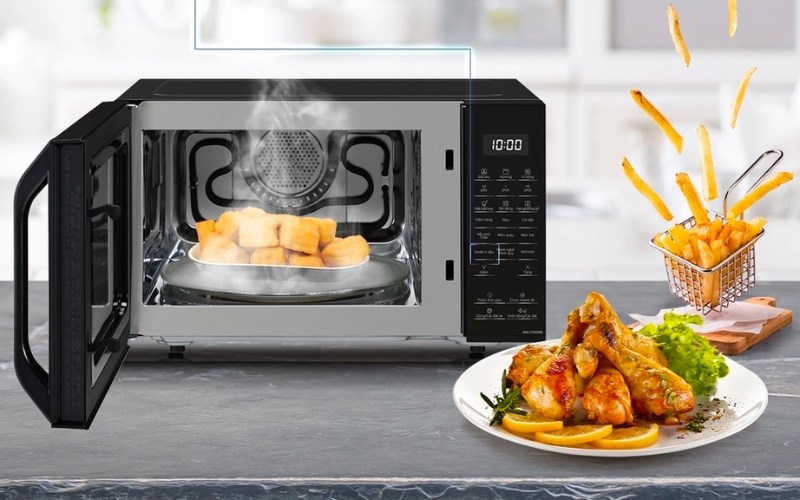
Kitchen counter space is precious real estate. Manufacturers get this, which is why the biggest trend is multi-functionality. Why have a microwave, an air fryer, and a convection oven when you can have one device that does it all?
- Convection Cooking: This isn’t brand new, but it’s now a standard feature on most mid-to-high-end models. A fan circulates hot air, allowing you to bake, roast, and brown food just like a conventional oven.
- Air Fry Functionality: This is the game-changer. Using high-velocity hot air, these microwaves can give you crispy french fries, chicken wings, and roasted vegetables without the need for a separate air fryer.
- Steam Cooking: A gentler way to cook, perfect for fish, vegetables, and even rice. It locks in nutrients and moisture for healthier, more flavorful meals.
|
Our Picks for the Best Microwave Oven in 2025
As an Amazon Associate, we earn from qualifying purchases.
|
||
| Num | Product | Action |
|---|---|---|
| 1 | Chefman Countertop Microwave Oven 0.7 Cu. Ft., 700 Watts with 10 Power Levels, 6 Cooking Presets with One-Touch Express Cook, Eco Mode, Child Safety Lock, & Mute Button - Black |

|
| 2 | BLACK+DECKER Digital Microwave Oven with Turntable Push-Button Door, Child Safety Lock, Stainless Steel, 0.9 Cu Ft |
|
| 3 | TOSHIBA ML-EM45P(BS) Countertop Microwave Oven with Smart Sensor and Position Memory Turntable, Function, 1.6 Cu.ft 13.6\" Removable Black Stainless Steel, 1200W |
|
| 4 | Farberware FMWO11AHTBKB 1.1 Cu. Ft. Stainless Steel Countertop Microwave Oven |
|
| 5 | Nostalgia Retro 1000W Microwave Oven 1.1 Cu Ft Capacity – Child Safety Lock, 8 Auto-Cook Settings – Countertop Kitchen Appliance – White |
|
| 6 | TOSHIBA EM131A5C-BS Countertop Microwave Ovens 1.2 Cu Ft, 12.4\" Removable Turntable Smart Humidity Sensor 12 Auto Menus Mute Function ECO Mode Easy Clean Interior Black Color 1000W |
|
| 7 | TOSHIBA ML-EM09PA(SS) Small Microwave Oven with 6 Auto Menus, Mute Function & Child Lock, LED Lighting, Perfect for Apartments & Dorms, 0.9 Cu Ft, 10.6 Inch Removable Turntable, 900W, Stainless Steel |
|
| 8 | Chefman Countertop Microwave Oven 0.9 Cu. Ft., 900 Watts with 10 Power Levels, 6 Cooking Presets with One-Touch Express Cook, Eco Mode, Child Safety Lock, & Mute Button - Black |
|
| 9 | BLACK+DECKER EM031MB11 Digital Microwave Oven with Turntable Push-Button Door, Child Safety Lock, 1000W, 1.1cu.ft, Black & Stainless Steel, 1.1 Cu.ft |
|
| 10 | TOSHIBA ML4-EM12PA(BS) Countertop Microwave Oven with Stylish Design As Kitchen Essentials, Smart Sensor, 13 Auto Menus&Mute Function, 1.2 Cu Ft with 12.4\" Turntable, 1000W, Black Stainless Steel |
|
Smart Technology and Connectivity
The smart home ecosystem is expanding into the kitchen. Wi-Fi-enabled microwaves are becoming the norm, offering features that were science fiction a decade ago.
“We’re moving past novelty features,” says John Peterson, an appliance engineer with over 15 years in the industry. “Smart microwaves in 2025 are about genuine convenience. They learn your habits, streamline your cooking process, and integrate seamlessly with your life.”
Imagine these scenarios:
- Scanning a barcode on a frozen dinner with your phone, which then sends the exact cooking instructions (power level and time) directly to the microwave.
- Using a voice command like, “Alexa, microwave popcorn for three minutes.”
- Getting a notification on your phone when your food is ready, so you don’t forget it while you’re in another room.
Inverter Technology for Precision Cooking
This is a huge leap forward in performance. Traditional microwaves work by cycling their power on and off. If you set it to 50% power, the magnetron is actually blasting at 100% for half the time and is completely off for the other half. This is why you often get unevenly heated food with hot spots and cold centers.
Inverter technology is different. It delivers a consistent, continuous stream of power at the level you choose. Think of it like a dimmer switch for a light bulb versus flicking the switch on and off. The result?
- Even cooking and defrosting: No more rubbery-edged, frozen-centered chicken breasts.
- Better texture: Food retains more of its natural moisture and flavor.
- Energy efficiency: It uses less power, which is great for your utility bill.
Key Features to Look for in Trending Microwave Oven Models 2025
When you’re shopping around, it’s easy to get lost in the jargon. Here’s a simple checklist of what to keep an eye out for.
- Multi-Functionality: Does it have convection, air fry, or steam capabilities?
- Inverter Technology: Look for this term for superior cooking performance.
- Sensor Cooking: Internal sensors detect the humidity released by food and automatically adjust the cooking time and power. It takes the guesswork out of reheating leftovers or cooking potatoes.
- Sufficient Wattage: For most families, 1000 to 1200 watts is the sweet spot. Anything lower will cook more slowly.
- Easy-to-Clean Interior: Look for non-stick or ceramic enamel interiors that you can wipe down easily.
- Quiet Operation: Newer models have significantly reduced operational noise.
- LED Lighting: Brighter, longer-lasting, and more energy-efficient than traditional bulbs.
Microwave Safety and Myths Debunked
With all this new tech, it’s natural to have questions about safety. Let’s clear up a few common misconceptions.
Is Microwave Radiation Harmful?
This is the big one. The short answer is no. The “radiation” in a microwave oven is non-ionizing, meaning it doesn’t have enough energy to damage DNA, unlike X-rays or gamma rays. The oven is designed with multiple safety features, including a metal mesh screen on the door, to contain the microwaves. As long as your oven’s door is intact and closes properly, it is perfectly safe.
A Quick Guide to Microwave-Safe Containers
Not all containers are created equal. I once learned this the hard way when a beautiful ceramic dish with a subtle metallic trim created a miniature lightning storm inside my microwave. It was a lesson I won’t forget!
- Look for the “Microwave Safe” Symbol: This is your best bet.
- Glass and Ceramic are Usually Safe: As long as they don’t have metallic paint or trim.
- Avoid Metal: Never put metal pans, aluminum foil, or utensils in the microwave unless the manufacturer’s instructions specifically say it’s okay for a certain function (like a metal rack for grilling).
- Be Wary of Plastic: Only use plastics labeled “microwave safe.” Some plastics can warp, melt, or leach chemicals into your food when heated.
- Paper is Okay (Sometimes): Plain paper towels and plates are generally fine for short periods. Avoid paper products with plastic coatings or recycled paper, which can contain small metal flecks.
Choosing and Maintaining Your Microwave
Ready to upgrade? Here’s a quick guide to making the right choice and keeping your new appliance in top shape.
| Microwave Type | Best For | Key Features |
|---|---|---|
| Countertop | Renters, flexibility, most common | Portable, wide range of sizes and prices. |
| Over-the-Range (OTR) | Saving counter space, integrated kitchens | Built-in ventilation fan and cooktop light. |
| Built-in / Drawer | High-end, seamless kitchen design | Installed into a cabinet or under a counter. |
Simple Maintenance Steps:
- Clean Spills Immediately: Don’t let food get caked on. It makes cleaning harder and can affect performance.
- Deodorize Naturally: Place a microwave-safe bowl with a cup of water and a few tablespoons of lemon juice or vinegar inside. Run it for 2-3 minutes, then let it sit for another 5 minutes before wiping the interior clean. The steam loosens grime and neutralizes odors.
- Check the Door Seal: Regularly inspect the seal for any cracks or damage. A faulty seal can leak microwaves and should be repaired by a professional.
- Clean the Waveguide Cover: This small, often overlooked panel on the interior wall is what protects the microwave’s internal components. Wipe it gently with a damp cloth.
Frequently Asked Questions
Q: What is the ideal wattage for a microwave oven?
A: For most households, 1000-1200 watts is ideal. It offers a great balance of cooking speed and efficiency. Compact models might be around 700-900 watts, which will work fine but take a bit longer to heat food.
Q: Can a convection microwave really replace my main oven?
A: For many tasks, yes! A good convection microwave can roast a small chicken, bake cookies, and heat a frozen pizza beautifully. It might be smaller than your main oven, but for smaller families or single meals, it’s a fantastic and energy-efficient alternative.
Q: How long should I expect a new microwave to last?
A: The average lifespan of a microwave oven is about 7 to 10 years, depending on usage and maintenance. Higher-end models may last even longer.
Q: Are smart microwave features actually useful or just a gimmick?
A: It depends on your lifestyle. If you love technology and use smart home assistants, you’ll likely find the voice commands and scan-to-cook features incredibly useful. If you prefer simple operation, they might be more than you need.
Q: What’s the best way to clean a really dirty microwave?
A: Use the steam-cleaning trick mentioned above! Fill a bowl with 1 cup of water and 2-3 tablespoons of white vinegar. Microwave on high for 3-5 minutes until it’s very steamy. Let the door stay closed for 10-15 minutes to let the steam do its work, then open it and easily wipe away all the softened grime with a sponge or paper towel.
The Future is Now
The microwave is no longer just a box for reheating coffee. The trending Microwave Oven models 2025 are a testament to how far kitchen technology has come, blending convenience with culinary capability. By combining the functions of an oven, air fryer, and steamer with smart, intuitive controls, these new appliances are empowering home cooks to do more, waste less, and enjoy the process. Whether you’re a tech enthusiast eager for a connected kitchen or a busy parent looking to simplify mealtime, the next generation of microwaves has something exciting to offer.